

Know Where You're Going to Chart Your Course
The Planning Process Collection, Part 2: Visioning

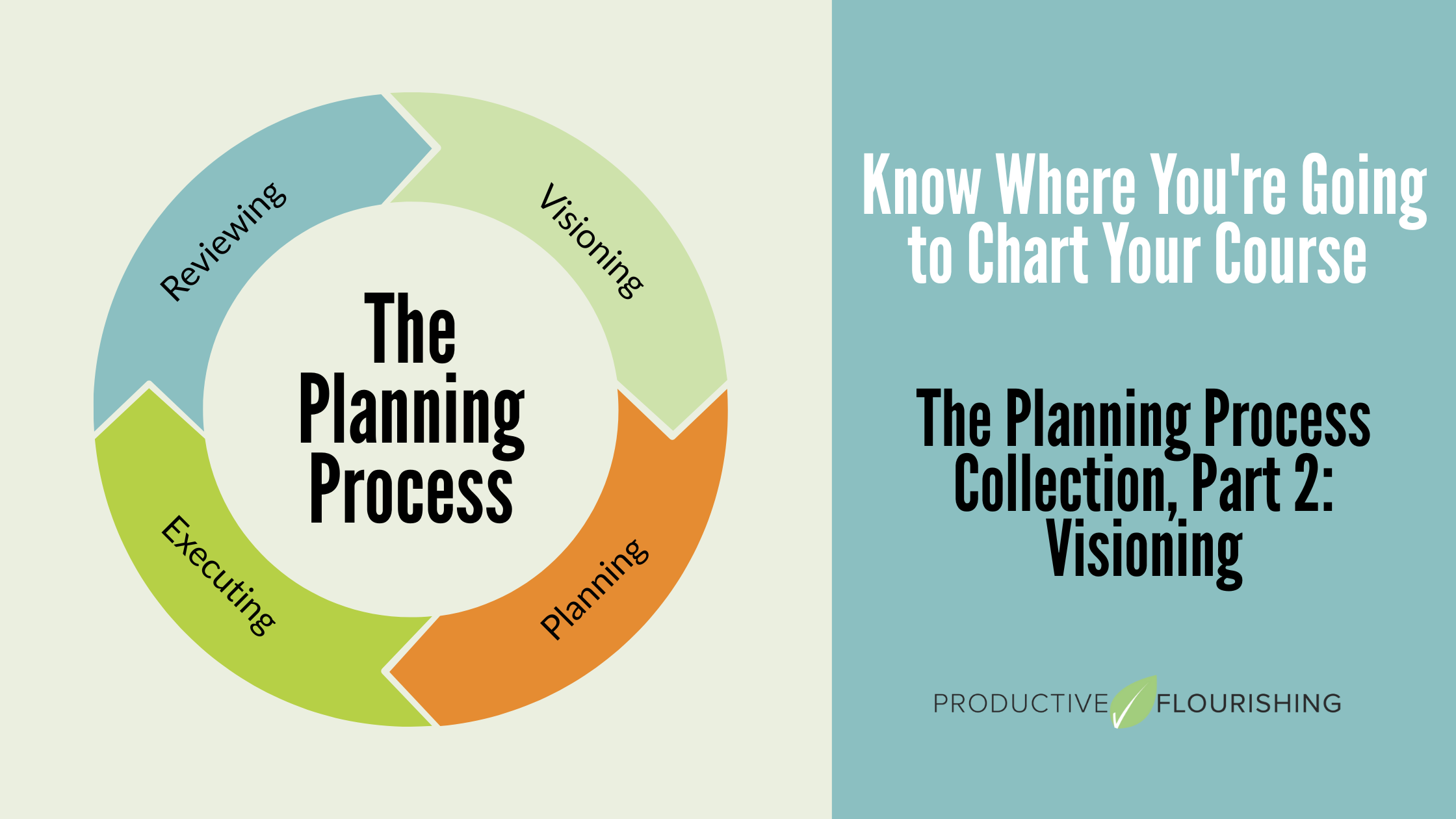
In the first part of this series, we explored how Reviewing helps you understand where you are. Now we turn to the second phase: Visioning, figuring out where you want to go.
Why Visioning Matters
Some people naturally live in this phase. If you’ve taken our Momentum Quiz, you might recognize yourself as a Visionary:
💡 Visionary: Big-picture thinker with endless ideas, always focused on the “why.” Visionaries get projects started quickly but may need support in breaking ideas into actionable steps.
Others find this phase uncomfortable or unnecessary. Designers (master planners) might rush through visioning to get to the detailed planning they love. Creators (action-oriented doers) might skip it entirely, preferring clear steps over dreaming about destinations.
But here’s the truth: all roles are needed in the planning process. And just as skipping Reviewing makes progress unnecessarily difficult, skipping Visioning leaves you rudderless:
Reviewing: You’ll have a starting point but no destination or direction
Planning: You can’t chart a course if you don’t know where you’re heading
Executing: You might get a lot done, but you won’t know if it’s moving you in the right direction
The Two Parts of Visioning
Visioning isn’t just picking a goal and moving on. It has two distinct parts:
1. Ideation:
This is blue-sky thinking, considering all possibilities without getting lost in the how. It requires taking off the constraints and allowing yourself to dream bigger than feels comfortable. This is where you allow yourself to see what you want, even if you can’t yet see how you’ll get there.
Focus on three questions: What future are you creating? Why does it matter? Who benefits from it?
2. Choosing:
Once you’ve opened the floodgates of what’s possible, you have to decide which opportunity you’ll actually pursue. You can’t do everything at once, which means letting go of some wonderful possibilities and putting others on hold.
This choosing process often brings up frustration, sadness, or grief — and that’s normal. If you’re not feeling some emotion about what you’re letting go, you might not be taking the choosing seriously enough.
What Might Cloud Your Vision
You might encounter resistance as you work through this phase. Here are three common blocks and how to navigate them:
“It’s not practical” — You might dismiss visioning as daydreaming or wishful thinking. But this is how you ensure you’re working toward somewhere worth going, not just making plans for the sake of having plans.
“Too many options” — The ideation phase can generate so many possibilities that choosing becomes paralyzing. But choosing is necessary to move forward.
“I can’t think that far ahead” — Visioning doesn’t have to mean looking years into the future. Find your comfortable time horizon (a week? a month? a quarter?) and stretch just slightly beyond it. Some days that might mean envisioning how your day will play out. Other times, you might stretch toward the year ahead or beyond.
Looking Ahead
If Reviewing was about having a conversation with your past self, Visioning is about connecting with your future self. Where are you at that future point? What do you see? What has become possible?
And if you’re leading a team, remember: Your vision needs to become shared vision. Your job isn’t just to see the destination, but to help your team see it too — and understand how their work helps get everyone there.
Visioning Resources
Below you’ll find resources to help you see more clearly, choose wisely, and move forward with confidence:
When you need to understand what visioning is and why it matters
Visioning Is an Important (Second) Step - A practical framework for envisioning your future using What/Why/Who questions
Goals Are Homes for Energy, Intentions, and Dreams - For when you resist “goal-setting” but still have things you want to pursue
Why Today Is the Perfect Day to Start Something New - Stop waiting for the “perfect” time to begin envisioning what’s next
When you’re struggling with too many possibilities
Your Reach Will Always Exceed Your Grasp - On accepting that you can’t do everything and making peace with it
How to Referee Your Project Cagematch - A step-by-step process for choosing between competing visions and priorities
It’s Time to Prune Your Projects - Why letting go of some ideas helps the right ones flourish
Why Strategic Planning Is So Hard for Creative People - Understanding the emotional work of choosing and why it matters
When you need to think bigger or bolder
Is Your Goal-Setting Including Your Dreams? - Make sure your actual wants and dreams are part of your planning
Shake It, Don’t Break It - How to step outside your comfort zone without breaking what matters
When visioning feels impractical or you’re stuck
Is Your Strategic Roadmap Too Ambitious? - The three-pass method for right-sizing your vision to reality
When you’re a leader who needs to share vision with your team
From Vision to Action: Aligning Your Team’s Focus - How to bridge the gap between leadership vision and team execution
Share Your Vision and Standardize Procedures For Effective Leadership - Making your vision clear and actionable for your team
When you need structured exercises to choose your direction
Letting Go of Your Projects & Pick Your Project - These two structured exercises from Start Finishing (Chapter 3) will help you choose which vision to pursue next. Worksheets for both exercises are available in the Start Finishing Field Guide or as part of the Annual Reflection Mini-Guide (for paid subscribers).
Up Next in This Series
Once you know where you are (Reviewing) and where you want to go (Visioning), it's time to chart your course. Read Part 3: Planning to learn how to chart your course from here to there.
Need help clarifying where you want to go or choosing between competing priorities? Our productivity coaching can guide you through the visioning process and help you focus on what matters most. Learn more about Productivity Coaching.