

Show Up and Do the Work
The Planning Process Collection, Part 4: Executing

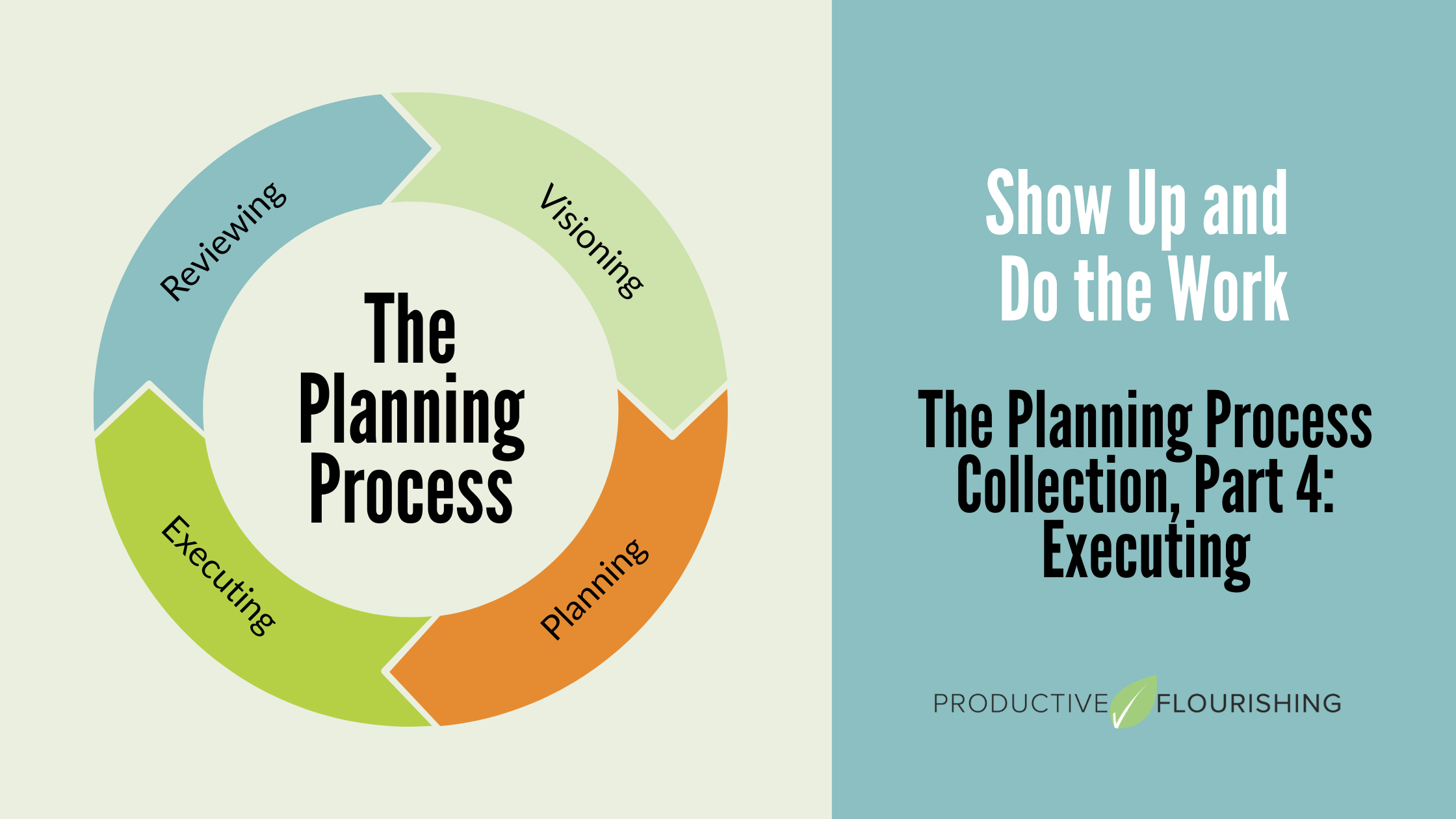
In Part 1 of this series, we explored how Reviewing helps you understand where you are. In Part 2, Visioning clarified where you want to go. Then Part 3, Planning, charted the course between the two. Now we turn to the fourth and final phase: Executing, where you actually make the journey.
Why Executing Matters
Some people naturally live in this phase. If you’ve taken our Momentum Quiz, you might recognize yourself as a Creator:
✨ Creator: Action-oriented doer who works best with clear steps or checklists. Creators achieve a lot but sometimes feel they're not progressing on what matters most.
Others struggle to stay here. Visionaries (big-picture thinkers) can find execution tedious once the ideation phase is behind them. Designers (master planners) can struggle to put the map down and start driving.
But all roles are needed in the planning process. And just as skipping the earlier phases creates problems, skipping Executing means none of the other work matters:
Reviewing: You know where you are, but you never move from it
Visioning: You know where you want to go, but it stays a dream
Planning: You have a beautiful roadmap that never takes you anywhere
Create the Conditions for Your Success
In the Planning phase, you named what success looks like. Now it's time to set yourself up for it.
Creating the conditions for success requires two things:
1. Understanding your unique working profile.
This is the combination of your strengths, affinities, and natural tendencies along with the environments and rhythms that bring out your best. When you work with these rather than against them, projects get easier, not harder.
2. Learning to work with your unique blend of TEA
Your time, energy, and attention are finite resources and they are not interchangeable. Having a free hour does not mean you have the energy or focus to do your most demanding work in it. Matching the right type of work to the right kind of capacity is one of the most practical moves you can make toward finishing what matters most.
What You Might Hit Along the Way
Even with the right conditions and a solid plan, execution rarely goes smoothly. Here are three common challenges and how to navigate them:
The Air Sandwich. The gap between your big-picture vision and your day-to-day reality is rarely just one thing. It can be competing demands pulling you in different directions, the stories you tell yourself about what’s possible, misaligned support, or simply not having enough of the right resources. Everyone’s gap looks different. Knowing what’s widening yours is the first step to closing it.
Drag points. Every project has them, and yours will be particular to you. They might show up as no-win scenarios you have built in your own mind, other people’s priorities crowding out your own, or bright shiny objects pulling your focus. When you know what these tend to be, you can build strategies to address them when they show up.
The red zone. That painful stretch near the end of a project where progress seems to stall just when you’re closest to the finish line. Fatigue, perfectionism, and second-guessing are all features of this phase. Knowing you’re in it is half the battle.
Knowing When You’re Done
Finishing is rarely a single dramatic moment; it’s a series of small completions that each require clarity, commitment, and the discipline to stay concentrated rather than drifting to the next new thing. And closing out a project well, capturing what you learned, and celebrating what you did, is not a bonus round. It’s what sets you up to start the next thing strong.
If Reviewing was a conversation with your past self, Visioning was connecting with your future self, and Planning was charting the course, then Executing is about being fully present in the here and now. It’s about responding to the conditions in front of you and showing up for your work until what you envisioned becomes real.
Executing Resources
Below you’ll find resources to support you in the doing:
When you need to set yourself up for your best work
How to Use Your GATES to Make Your Project Easier - Use your Genius, Affinities, Talents, Expertise, and Strengths to make your projects easier and more energizing
The Power of Environment - Design the spaces where you work to support focus, flow, and follow-through
Work with Your Chronotype Instead of Against It - Understand your natural energy rhythms and stop fighting your own biology
When you need to use your TEA (Time, Energy, and Attention) well
How Heat Mapping Your Day Can Reveal Your Most Productive Hours - Track your own energy patterns to discover when your TEA is at its highest
How to Be a Productive Powerhouse Using Time Blocking - Use four block types to protect your best work hours and build in the recovery that keeps you going
Block Scheduling: Create a Weekly Schedule That Works for You - Structure your week around your real capacity, not just available time
Getting the Most from Your Time Blocks - Navigate the most common misunderstandings about block scheduling so your blocks actually work
When you need to build habits and routines that support consistent execution
Are Your Habits Working for You? - Evaluate whether your current defaults are propelling you forward or holding you back
Is It Time to Rethink Your Routines? - Know when your routines are serving you and when they are getting in the way
Cold Start Routines - Use pre-defined sequences to get into flow faster, even on your hardest days
When you hit challenges mid-execution
The Air Sandwich: Why Your Big Picture and Day-to-Day Reality Don’t Link Up - Understand the five forces that create the gap between your vision and your daily work
Keep Flying by Accounting for Drag Points - Navigate no-win scenarios, other people’s priorities, and naysayers without losing your momentum
5 Ways to Get Through the Creative Red Zone - Push through that painful final stretch and finish what you started
When you need to stay focused on what matters most
5 Ways to Resist Bright Shiny Object Syndrome and Finish What You Start - Stay the course when new ideas and distractions pull at your attention
The Five Projects Rule: Defining Your Best Work - Keep your active project list short enough to actually make progress on what matters
If You’re Planning Effectively, You’ll Always Be Changing Your Plans - Learn why adapting your plan mid-execution is not failure; it is good planning
When you need to finish and close out well
The 5 Cs of Completion - Move from clarity to concreteness to commitment to concentration to celebration
CAT Work: How Clean-Up, Archive, and Trash Sets Up Your Next Project - Close out well so your next project starts on solid ground
When you are leading a team or organization
7 Practices to Elevate Your Strategy Execution - Practical approaches for leaders who need to drive execution across a team or organization
When life disrupts your execution
How to Overcome Major Disruptions in Your Work Life - Navigate the big interruptions without losing all your progress
What to Do When Life Shatters Your Plans - Find your footing again after the kind of disruptions that change everything
Up Next in This Series
Now that you’ve moved through all four phases, Part 5 will bring them together. Because while we’ve explored Reviewing, Visioning, Planning, and Executing one at a time, in practice, they are not a straight line. They overlap, feed each other, and sometimes happen all at once. More on that soon.
Struggling to execute on what matters most, even when you have a plan? Our Productivity Coaching can help you identify what is getting in the way, build better working conditions, and stay on track through the inevitable challenges of doing the work. Learn more about Productivity Coaching.
Executing is essential for transforming plans into reality, especially for action-oriented individuals like Creators. Every role, including Visionaries and Designers, is crucial in the process, as skipping execution renders previous efforts meaningless. To succeed, understand your unique working profile and effectively manage your time, energy, and attention. Anticipate challenges like the "Air Sandwich" gap between vision and reality, drag points that hinder progress, and the "red zone" of fatigue. Remember, finishing involves a series of small completions that require clarity and commitment. Embrace the present, respond to your conditions, and celebrate your achievements to pave the way for future success!