
What We Gave Up When We Gained Abundance

by Charlie on October 2, 2009

in Flourishing

We went camping the weekend before last and managed to do so without injury. It turns out that slowing down to a sustainable, mindful pace and going with the right tools makes a huge difference.

If that were all I had to talk about, I probably would have tweeted it. There’s more, though…

This was the first time that we’ve been camping in a few years, and since then my intuitive and metacognitive faculties have blossomed to a degree that has really surprised me. It was interesting to be aware of what I was thinking as I was doing things, rather than just doing things. The recurring theme that kept bubbling up for me is what we, as a society, have lost with our new-found abundance.

Firewood vs. Meaning

At one point, we were running low on processed firewood of a certain size. In that moment, I recognized how different of an orientation to tasks this was for me, compared to my normal orientation. I didn’t ask “What do I need to do?” or “What’s the most meaningful thing I can right now?,” because what I needed to do was very clear: I needed to get off my ass and cut some more firewood.

The choice was easier and clearer, but the work was harder – and the consequences of not doing the work were much more clear. This is the exact opposite of my current daily activities, where the choices are harder, but the “work” is easier; furthermore, the consequences of not doing what I need to do are much less clear. This reinforced to me how much the paradox of choice is a problem that only comes with abundance; in a context in which you’re just trying to survive or maintain your resources, you don’t spend much time worrying about all the (conceptual) things that need to be done or thinking about meaning. You just do the things you need to do to survive.

At the same time, many of us get caught into thinking that keeping up with the Joneses is surviving and thus continue to do the things we don’t want or need to do. We have two cars because we have two working adults, and both need cars. But cars are expensive, so we both have to work more hours, or spend more money, on those cars. Rarely do we ask “Do we really need this?” – instead, it’s just written off as the cost of living in our society.

Of course, cars are an easy example. The size of our homes, the food we eat, the clothes we wear, and the gadgets we buy are all choices that we either make or have made for us. If we were more mindful of what we really needed, as opposed to those things that we think we need, we would make other choices – choices that would probably lead to a greater sum of happiness.

The irony, of course, is that we’d be exchanging the difficulty of working to maintain a way of life that’s easy – since it’s given to us by our societies – for the difficulty of actualizing our true selves and doing work that’s easier for us.

When Time Becomes a Foreign Concept

Back when we used to camp more often, I was adamant about not wearing a watch. With our normal days so regimented and time-driven, why take that life with you when you’re trying to get away from it?

This time around, I did the same thing…mostly. I wanted to check what time it was at a few points during the day because I was testing my intuition; I didn’t really care what time it was, but I was curious to see how my experience and awareness of time matched “reality.” (Aside: time is a human artifact – you don’t find it in nature. Hence, checking my intuition against time is not equivalent to checking my intuition against reality.)

When you’re not marching to the beat of time, you have to become more intuitive and aware of things. You don’t make lunch because it’s 12pm – you make lunch because you’re hungry. You don’t cook something for 5 minutes and turn it; you cook it until it’s golden brown, then you turn it. You don’t wake up in the morning at 7:00am – you wake up when the sun comes up…or earlier, if you’re as miserable as we were. The passing of many moons has changed the reality and consequences of sleeping on the ground for us.

While I’m grateful for what progress and technology has brought us, we have to recognize what we’ve lost. It’s so hard to listen to ourselves any more because, in large part, we’ve abdicated our intuitive capacity to the regimentation of human artifacts. Before we decide whether we start or stop working, we ask what time it is. We wait until certain times to eat. It goes further: Angela let me know the other day that over 80% of births in Lincoln happened between 8am and 5pm, which means that our newborns come into the world nice and tidily on schedule. “Welcome to the world…here’s your watch!”

Ironies, ironies. When you talk to experts in a domain, they’re able to intuitively come to sound decisions to a degree that amateurs can’t fathom. Professional chefs don’t really cook to time. When we experience Flow, we lose track of time and are at our intuitive peak. Remarkable sexual experiences – the type which we long for and have caused many troubles through the history of our species – are ones in which we lose track of time and are completely in the here and now, wherein the boundaries between partners dissolve and each is intuitively aware of how she and her partner are feeling.

Our excellence is found in sensing, not measuring, yet we’ve learned to only trust what we can measure.

Seeing A Dark Sky Anew

This weird thing happened later in the day. The sun went down, it got dark, and there was no light switch. We silently sat in the darkness.

Sure, we had a lantern, but they’re only really good for making sure you don’t stumble over chairs, sticks, and other people. Unless you want to do something by flashlight or other electric lighting, you’re pretty constricted on what you can do. It boils down to poking at a fire and talking to those around you – which is yet again one of the beauties of stepping away from modernity for a while.

At one point, I happened to look up. Above me were some once familiar friends who were now strangers to me. The city lights and busyness of modern living had made the night just another time, but without all of those artifacts, and by complete chance, I looked up. The moon was hiding behind the Earth, so the only light to be seen came from the untold billions of stars shining back down at us.

The band of the Milky Way showed its faint light, and along the band, I saw collections of stars that I knew made the outline of constellations. I used to be able to name them and tell stories about them, but now all I could do was gesture towards them. They were there, waving at me – pulling at my imagination, whispering their tales to me; yet I could not hear their words or see their faces.

We took a while to take in the breathless beauty of the night’s sky and watch shooting stars streak across the blue-black expanse. We imagined living two or three thousand years ago, before science and before you could just run inside and turn a light on.

Every night, those friends would be there, and what many of us don’t often think about is that the landscape of the night changes. Five of the lights walk around fairly obviously; in time, we came to know them as the planets of Mercury, Venus, Mars, Jupiter, and Saturn. The constellations shift through the seasons, so being born “under a sign” quite literally meant that you were born when one of the constellations was overhead. And every night, some of the lights streak across the sky and fade into brilliant nothingness.

In many ways, the night sky is more foreign to us than it was to our ancestors. We know about it – but it’s neither as familiar or as wondrous as it was then. You can’t help but look up at the night sky without being wonderstruck, and, for our ancestors, the lack of explanations birthed tales of gods and spirits. Not having an explanation for what they were seeing was just unacceptable, since they were as familiar with it as we are of gravity. Human curiosity is something that will always remain – I hope – but the questions we ask are different.

When we look at the night sky, we wonder about life “out there” or how big the universe is. When they looked at it, they saw life that was once here and looked for stories that related to them. Our stories are stories about strangers and distance; theirs are stories of family, friends, gods, and closeness.

The ails of past societies were vastly different than our own, but what I don’t see surface that often are stories about the effects of isolation and loneliness. Does the absence of stories and feelings of connectedness to everything play a role in the depression, sadness, and melancholy that are now so rampant? I can’t prove it, but I think so.

Abundance, Modernity, and Choices

Running water, indoor heating, electric lighting, and, later, air conditioning (and countless other small things) brought on a new way of orienting ourselves to the world. Rather than spending time on acquiring necessities, we started to develop technology at an unprecedented rate. Modern medicine, automobiles, airplanes, and computers all followed in sequence, and these are all things to be grateful for.

But in the meantime, we lost ourselves. We’ve abdicated the choice to become ourselves in order to maintain an abundance we don’t need. We treat ourselves like logical machines instead of the intuitive, organic beings that we are. And we no longer tell inspirational stories that remind us of our interconnectedness because we’ve shut ourselves away into increasingly larger homes with increasingly smaller perspectives and larger emotional voids.

By no means is this an appeal to the good ‘ole days – the past contained a lot of suffering, oppression, and tragedies that no reasonable person would wish to return to. And I also am not saying that we have to choose between abundance and the various benefits of yesteryear; in fact, I think we can have both. We just have to be aware of the choices we’re making and the often unconsidered reasons we’re making them.

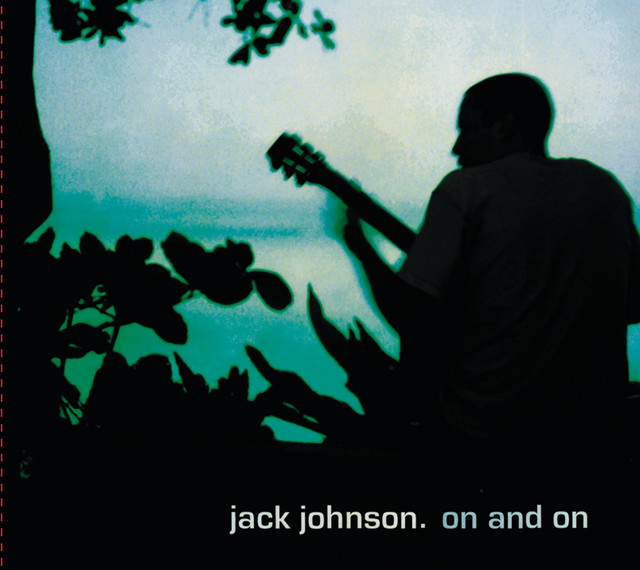
I’ll let Jack take it from here:

SHARE & ENJOY:

StumbleUpon Stumble this post
submit to reddit Submit to Reddit
Delicious Bookmark on Delicious
RSS Subscribe to Productive Flourishing

{ 14 trackbacks }

Tweets that mention What We Gave Up When We Gained Abundance -- Topsy.com
Twitter: lovejodirenee
October 2, 2009 at 3:37 pm
What We Gave Up When We Gained Abundance | organic life style magazine
Twitter: lovejodirenee
October 2, 2009 at 4:06 pm
New Gadgets | What We Gave Up When We Gained Abundance
Twitter: lovejodirenee
October 2, 2009 at 4:29 pm
What We Gave Up When We Gained Abundance : Manifest My Desire
Twitter: lovejodirenee
October 2, 2009 at 10:35 pm
under the same sun | U.S Trend Keywords
Twitter: lovejodirenee
October 3, 2009 at 12:01 am
Monday Heart Stuff #5 » Heart of Business
Twitter: lovejodirenee
October 5, 2009 at 10:37 am
The First Agile Living Blog Carnival Roundup! | Mine Your Resources
Twitter: lovejodirenee
October 6, 2009 at 12:02 am
Four Ways to Be More Interesting | Copyblogger
Twitter: lovejodirenee
October 6, 2009 at 9:14 am
Four Ways to Be More Interesting
Twitter: lovejodirenee
October 6, 2009 at 12:22 pm
Four Ways to Be More Interesting | Internet Marketing Superstar
Twitter: lovejodirenee
October 6, 2009 at 1:15 pm
Four Ways to Be More Interesting | Marketing Blog | Affiliate Blog
Twitter: lovejodirenee
October 6, 2009 at 5:04 pm
The View From a One Inch Frame « A Perfect Life Now
Twitter: lovejodirenee
October 6, 2009 at 7:05 pm
Four Ways to Be More Interesting | The Best Seo Blogs
Twitter: lovejodirenee
October 6, 2009 at 8:43 pm
Four Ways to Be More Interesting | Internet Success Hub
Twitter: lovejodirenee
October 18, 2009 at 11:00 pm

{ 13 comments… read them below or add one }

1 JoVE October 2, 2009 at 8:59 am

Excellent observations, Charlie.

We now live in the country with one car. It takes some organization. And Mat gets a lift to the park & ride with the neighbour but it can work. Or we are trying to make it work.

And many people can’t see the stars even if they wanted to because of light pollution in and around cities. The difference in the night sky here and in the city is remarkable.
.-= JoVE´s last blog ..Embrace the research process =-.

Reply

2 Marissa October 2, 2009 at 3:48 pm

Fascinating, beautiful post. I can identify with the ideas, though I have not been able to talk about them as eloquently as you do here. I’m intrigued, and I’d love to see more down the road, especially on that sweet spot of balance between intuitive and organic selves we once were, and the modern and abundance-based selves we are now.
.-= Marissa´s last blog ..Monday Mashup #1: Eight Remedies =-.

Reply

3 Duff October 2, 2009 at 3:52 pm

Beautiful musings, Charlie. Your writing is becoming quite excellent.

Reply

4 Michelle Russell October 2, 2009 at 4:57 pm

Charlie, I’m astounded by your clarity here. This is a subject area that I feel quite passionate about, and I could comment individually on every single paragraph. In general, you’re so right–we don’t often see the trade-offs we’ve made for the advances our modern society has brought us

Here’s what I **love** that you wrote:

“I also am not saying that we have to choose between abundance and the various benefits of yesteryear; in fact, I think we can have both.”

It’s easy to find fanatics in both the “technology is progress!” and the “we should all go back to the good old-fashioned ways” camps. But either extreme is…well, too extreme, I think. Technology is here to stay, and thank goodness for (most of) it! But we have to recognize its drawbacks as well as its benefits, and work to balance everything out.

You say we can have both abundance and a sense of connection to our time-honored values. I agree. But the huge question I’m trying to explore is HOW to do that. Thanks for helping me articulate the question more clearly!
.-= Michelle Russell´s last blog ..Please Tell Me What YOU Want! =-.

Reply

5 Lisa Sonora Beam October 2, 2009 at 5:20 pm

Charlie,
This post is something I’ll be savoring again over the weekend.

For now: all of it makes me homesick for the backcountry wilderness of Alaska, where I used to live during summers. Being “off the grid”, has a way of bringing what’s really important (and necessary/unneccesary) into sharp focus. So was being cut off from easy communication.

This was back in the late 90’s, and my emergency communication source was an air-to-ground radio — handy only if a plane happened to be flying overhead and I got on the right channel. Luckily, I never had to use it. (Chopping wood, for example, became much more *meditative* in those circumstances.)

For “normal” phone needs, I had to lug a phone device the size of a backpack up and over two not-so-small ridges in order to maybe, if the weather was cooperative, get a signal. In grizzly country. If there was a grizzly in view, the call got postponed. Because I’m chicken that way.

What the wilderness taught me in those years is still something I am trying to put into words. You do such a lovely job of it with your writing.

*Sigh* It’s time I stop putting off that trip to the Patagonia wilderness. I’m pretty sure I haven’t gone yet because I fear I might not want to come back!

Back here in “modern life”. I went carless as a yearlong experiment back in March, 2008 – and still have not found a good enough reason to buy a car again. This does mean certain re-arrangements, but it’s had some nice unintended positive consequences: more fitness and less recreational shopping come to mind.

There have been other “things” I have given up as well in the spirit of being a Digital Nomad. But nothing I really miss.

Thanks again for such a thoughtful post.
.-= Lisa Sonora Beam´s last blog ..RE: How To Write Your #@%* Book Already =-.

Reply

6 Deb Owen October 2, 2009 at 8:11 pm

This is a fantastic post, Charlie.

It reminds me of the video I posted last month of the speech by Alain de Botton (sp?).

One of the points he so eloquently makes is that there are two areas of book sales that have simultaneously increased. One are the books that tell us ‘you can do anything’. The other are books on how to deal with depression and/or increase self-esteem.

With choice, as with freedom, comes responsibility.

I do think we can utilize technology, and even have all the ’stuff’, and still stay in touch with who we are and with our intuition. It takes work. It takes practice. But I do think it’s possible.

I find it interesting from a business perspective because we find that people are either viewed as ‘passionate’ (and maybe, therefore less serious and less knowledgeable) or they’re viewed as highly knowledgeable (and therefore, less passionate). Sadly, as we look at most we’d regard as leaders, especially in business literature, this proves to be true.

Still, I think it’s possible to have both and find the balance between the two.

Thanks for the great post!
All the best!
deb
.-= Deb Owen´s last blog ..are you dorothy or the wicked witch? (have you lost your power? do you need to get it back?) =-.

Reply

7 bretthimself October 2, 2009 at 8:48 pm

Remarkable post. How attached we’ve become to time is a little unsettling – I think we need to find a way to disconnect it from our lives. In a sense, the clock is our master, driving us mechanized humans constantly, so we never stop and enjoy life. I just may try and remove clocks from my house, now…

Thanks for the great work, Charlie.
.-= bretthimself´s last blog ..On Contentment =-.

Reply

8 Naomi Niles October 3, 2009 at 12:19 am

You somehow have a way of posting the same things I’ve been thinking about or discussing with my hubby and putting them in a beautifully eloquent way.

This reminds me of the discussion we had a few weeks ago, in fact. We saw an interesting documentary about the peasants in England. Contrary to popular belief, they actually didn’t have such a bad life. They had a strong family and community life, a warm house to live in with all the basic necessities and plenty of time to play. In fact, they only worked 5 hours a day.

Sure, they had to work for something they didn’t own (the land). But, aren’t a lot of us doing that anyway when we pay rent?

It made me think that maybe all this work for having what we consider a basic living doesn’t make much sense at all. And it makes me sad to see some families and friends more focused on their toys than spending time with and supporting each other.

We actually just got a used car a couple months ago without having one for a year and a half or so. Uncomfortable without one? Yes. At least in the U.S., it’s a pain to get around without a car. Totally necessary? No. Same thing with stuff. We moved from Spain to the U.S. last year with 4 suitcases between us and nothing else, starting from scratch. We didn’t die.

A lot of things just don’t seem so necessary when you learn to give up your stuff and live more simply. Not that you must do that in order to be happy. It’s just good to learn how to separate your needs from your wants and realize when your lack of stuff is bringing unnecessary unhappiness when it shouldn’t even be getting into that area of your life.

I could go on forever, but I’ll stop now, lol. Thanks for this great post, Charlie. You definitely touched on something here.
.-= Naomi Niles´s last blog ..Web Designers – Don’t skip the wireframing phase. =-.

Reply

9 Cath Duncan October 3, 2009 at 1:56 am

mmm… I’m feeling inspired to go camping now! I think my most favorite holiday ever was when Andy and I took to Namibia for 4 weeks by motorcycle. Two up on a bike and carrying your camping gear meant we couldn’t carry much else, so we had no camping light. For 4 weeks we woke with the sun and went to sleep when the sun went away, we noticed and fully experienced the weather, we cooked over fires, we had no computers or TVs to distract us so we read and had long conversations, we got out of our heads and into our bodies… thanks for the reminder!

Cath
.-= Cath Duncan´s last blog ..How to Feel Secure When Everything Is Changing =-.

Reply

10 Ali Hale
Twitter: alihale
October 3, 2009 at 10:56 am

Like Duff says, this is beautifully written – a treat to read. Thanks, Charlie!

There’s also a lot to think about here. For some reason, the idea of being without a watch hit me most strongly. I *always* wear a watch (I feel quite lost without it) and I wonder if this slight obsession with knowing what time it is and how much time has elapsed is one of the reasons I tend to struggle to sit still and simply let life go on for a few minutes without me pushing to achieve things.

When we (boyfriend & I) went walking for a few days recently, something that struck me was that I lost track of the passage of time. It seemed to go more quickly than expected, and I often found myself surprised at how long we’d been walking for.
.-= Ali Hale´s last blog ..Are You Pursuing Your Goals to the Bitter End? =-.

Reply

11 georgia October 3, 2009 at 6:51 pm

Wonderful thought provoking post Charlie. It is not surprising that your clarity came from allowing yourself the ‘time’ to reflect, something we don’t usually ‘pencil in’ to our schedules, and during a period where there was ‘nothing else’ to do but ‘walk at a slower pace’, ’sit quietly and poke at the fire’ or ‘talk with others near us’. So many of us do not even know how to separate our needs from our wants, let alone what is clearly needed to survive.
Living in the Outback for many years brought that point into laser focus for me when we had such extremes of weather, drought and flooding, and often no power or lights. Not being spoiled by the ‘things’ we were used to and paying attention to what was needed according to the seasons and not the clock was a real eye opener. I hope I have carried some of that resourcefulness with me through my life and passed some of it on to my children. It is nice to know that we can entertain ourselves with good conversation, healthy curiousity, and an adventurous spirit.
I don’t remember my children ever saying ‘I’m bored’ because they were too busy exploring their world outside, making discoveries for themselves in person, rather than a computer game. There is a lot to be said for being fully engaged in life, real life, and finding that balance of what we truly need and what we can do without. I agree with you that you can have abundance but how we define abundance maybe is the question.

Reply

12 Karl Staib - Work Happy Now October 4, 2009 at 9:32 am

I love how aware you are when you are camping. How you see the importance of getting up to cut some fire wood. There is no thinking, just being.

I feel this way when I go for a trail run with my dog. We recently went and I discovered 1,000 super small insects crowding on one leaf. They were all the same kind but various shades of brown, red and green. It was possibly the most beautiful thing I’ve seen in a long time. There was no time, just beauty.

We do need to get back to enjoying the actions and adjusting to each occurrence. We can’t just let time dictate when or how. We need to be aware of when or how and enjoy each moment of it as it’s happening.
.-= Karl Staib – Work Happy Now´s last blog ..Hard, Fun and The Beautiful – Beautiful Brain Edition =-.

Reply

13 Charlie
Twitter: CharlieGilkey
October 5, 2009 at 5:32 pm

@JoVE: Angela and I moved to only having one car, too. It takes a lot of organization and communication, but we’ve loved the payoff: no payment, less financial overheads, and one less thing to worry about. It can work.

@Marissa: I’m still working through a lot of it myself, but the biggest advance I’ve made is learning to at least check my intuition when it comes to decisions. So it goes something like: “What does the information tell me? And what does my intuition say?”

@Duff: Thanks, man – I appreciate that. Earlier, I was reading a post that I wrote last February, and I can’t help but agree that my writing is now much better than it used to be.

@Michelle: Re: HOW. Asking better questions goes a long way, and so does assessing where the answers are coming from. Something as simple as asking why you made a certain choice can be a powerful way to harness the goodness of what we have without letting it make choices for us.

@Lisa: Avoiding grizzlies isn’t being a chicken – it’s virtuous: courage lies between rashness and cowardice. And don’t put off the trip because you’re scared you won’t want to come back – you know you won’t want to – but you’ll know where your home is.

@Deb:

I find it interesting from a business perspective because we find that people are either viewed as ‘passionate’ (and maybe, therefore less serious and less knowledgeable) or they’re viewed as highly knowledgeable (and therefore, less passionate). Sadly, as we look at most we’d regard as leaders, especially in business literature, this proves to be true.

I’d seriously like to see this change more quickly than it is. One of the things I’ve been writing and thinking a lot more about is people-centered capitalism, and I think one of the hallmarks of PCP is that you see a much higher degree of integration between passion and knowledge. People in PCP thrive when they have both and languish when they have one or the other.

@Brett: Careful with the clocks, Brett – you’ll go through a bit of detox. It’s probably better to have one room without a clock to learn how to sit with yourself without it being something that bothers you. This comes from personal experience, as detailed in A Weekend Unplugged.

@Naomi:

You somehow have a way of posting the same things I’ve been thinking about or discussing with my hubby and putting them in a beautifully eloquent way.

That’s because I install hidden microphones in people’s houses. Who needs surveys when you have hidden surveillance?

A lot of things just don’t seem so necessary when you learn to give up your stuff and live more simply. Not that you must do that in order to be happy. It’s just good to learn how to separate your needs from your wants and realize when your lack of stuff is bringing unnecessary unhappiness when it shouldn’t even be getting into that area of your life.

Agreed completely. The trick is learning to ask the question under the first one. What is this thing doing for me? What need does it solve? If you can’t answer that, it’s probably something you could live without.

@Cath: You are too coo!. Motorcycling across Namibia?! Who does that?! Oh, yeah…Cath does that. Cath Duncan: The Original Vagabond. :p

@Ali:

I *always* wear a watch (I feel quite lost without it) and I wonder if this slight obsession with knowing what time it is and how much time has elapsed is one of the reasons I tend to struggle to sit still and simply let life go on for a few minutes without me pushing to achieve things.

I feel a personal development challenge here, Ali! Slowly stop wearing your watch, and I bet you’ll start asking more internal questions like “How do I feel?” “Do I feel like working?” “Am I hungry?”

What if self-mastery is the greatest thing you could achieve…and learning to listen to yourself was both necessary and instrumental to that goal?

@georgia: Engagement can come from a variety of activities, but I think the main difference between online engagement and offline engagement is the amount of distractions and interruptions. We’ve made machinery to remind us of all sorts of things – unfortunately, they can’t remind us of what’s important.

@Karl: “There was no time, just beauty.” Wonderful line, Karl – as that’s the exact feeling. Oneness between experience and the experiencer. “Time” introduces a third participant that breaks the unity, and we’re left separated.

Reply

Leave a Comment

You can use these HTML tags and attributes: <a href="" title=""> <abbr title=""> <acronym title=""> <b> <blockquote cite=""> <cite> <code> <del datetime=""> <em> <i> <q cite=""> <strike> <strong>

Previous post:

Next post: